
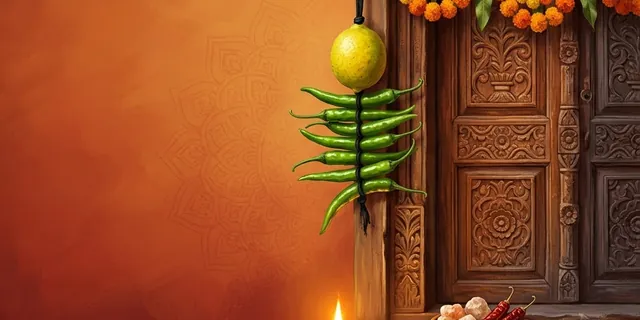
Black thread against nazar
Traditional belief: deflects the evil eye. Never tie one around a baby's neck.
Updated: 31 October 2026
In short
- Take a plain, clean black cotton thread.
- Tie it on the wrist or ankle, loose enough to slip a finger under.
- Check it daily on children, and replace it when it frays.
A thin black thread on a child's wrist or an adult's ankle is one of the most common protections against nazar (the evil eye) in India. People of many backgrounds wear one, and they are sold at temples and markets for very little money. This article explains the belief behind it, how it is traditionally tied, and what care is needed, especially with babies.
The belief behind it
Black is widely treated in Indian tradition as a colour that absorbs and deflects harmful influence. That is why a kala teeka appears behind a baby's ear, and why a black thread is tied on someone who has been much admired, or who is ill or anxious. Some people also link the thread with Saturn, whose colour is black, and tie it on a Saturday. The left ankle is traditionally preferred for women and the right for men, though customs vary widely, and many people simply choose the wrist or the ankle that suits them.
For many families the meaning is simple: a mother ties it on her child, and the thread says "I am looking after you". The comfort this gives can be real, whatever one believes about the evil eye.
How it is traditionally tied
- Take a plain, clean black cotton thread. A thin one is fine.
- Many people wash their hands and tie it on a Tuesday or a Saturday, sometimes after saying a short prayer such as the Hanuman Chalisa or "Om Namah Shivaya".
- Some families tie seven or nine small knots along it.
- Tie it snugly but loosely enough that you can slip a finger under it.
- Replace it when it becomes dirty, frayed or breaks. Many people drop the old thread in running water, or just bury it in a flowerpot.
Thread does not need to be bought from anywhere special. Sewing thread from home is exactly the same thing.
Safety with babies and children
This matters more than the custom itself, so please take it seriously.
- Do not tie threads around a baby's neck. There is a risk of strangling, and doctors advise against necklaces and similar items for infants, especially in sleep.
- A thread on the wrist, ankle or waist can tighten if the limb swells or the baby grows, cutting off blood flow. Hair and threads wound around tiny fingers and toes can also cause serious injury. Check it every day, and slip it off during an illness.
- Beads, charms and small metal pieces on the thread are a choking risk for babies.
- If the skin under the thread is red or swollen, or the hand or foot looks puffy or discoloured, cut it off and speak to a doctor.
For adults, take it off if you have swelling or a wound on that limb. Those who have diabetes should check that it is not rubbing their ankle.
Keeping it simple
A thread cannot protect a child from illness. Vaccines, safe food and clean water do that, and a baby's fever needs a doctor. A black thread costs almost nothing, so please do not pay large sums for one that is claimed to be "abhimantrit" or specially charged.
Questions people ask
Which foot should it go on? Customs differ. Many people follow their own family's practice, and tradition allows for this.
What if it breaks? Some see this as a sign that it has "absorbed" nazar. Others think that thread simply wears out. Either way, just tie on a new one, if you like.
Astrology and totke are traditional beliefs, offered for guidance and interest. Nuskhe are home remedies and are not medical advice; see a doctor for any health concern.